
Roofing and Siding on Cape Cod
We work as a roofing and siding contractor on Cape Cod, out of Centerville, mostly inside the Town of Barnstable and the towns either side of it. The roof and the walls are where a Cape house takes its punishment, and they fail slowly enough that nobody notices until water is already inside. Most of this page is about reading a house before any work starts, because the same detail that lasts thirty years on a sheltered street fails in twelve on an exposed corner half a mile away.
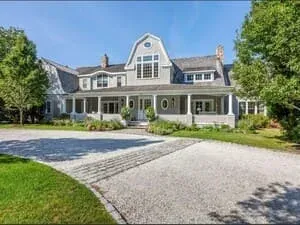
Salt air and driven rain are a different climate
Wind off the water carries salt, and salt does not dry off the way rain does. A film of it sits on nail heads, on flashing, on gutter hardware, on the underside of a soffit, and it draws moisture back out of the air on every damp morning. Fasteners corrode from the outside in. Painted steel goes first. Anything galvanised that took a scratch during installation goes next. On a house within sight of the water, stainless fasteners and non-ferrous flashing are not an upgrade line on an estimate. They are the reason the job is still watertight in twenty years.
Driven rain is the other half of it. A nor'easter does not drop rain onto a roof, it pushes it sideways into a wall. Water gets under a shingle butt, up behind a wall course, in behind a trim board, into the head of a window. Details that shed water perfectly well under vertical rain leak under horizontal rain. That is why the order of assembly matters more here than the brand of shingle: housewrap lapped so every course sheds onto the one below it, head flashing over every opening, kickout flashing where a roof edge dies into a wall. We look at the flashing before we look at the shingles, on every house, every time.
Cedar goes grey at different speeds on the same house
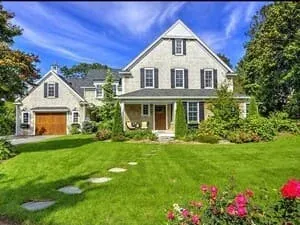
Cedar weathers grey in ultraviolet light and it darkens where it stays wet, so the colour of a cedar wall is really a map of its exposure. The south and west elevations take the sun and the prevailing weather. They silver first, fairly evenly, and they dry out fastest after rain. The north side gets less sun and holds damp longer, so it drifts toward a darker, greener, mottled grey with algae in it. A wall under a tight tree line does the same thing regardless of which way it faces.
Homeowners often read that difference as a defect and ask us to fix the dark side. Usually there is nothing to fix. What we look at instead is whether the shingles are cupping, whether the butts are splitting, whether the courses have opened up, and whether the sheathing behind them is dry. A sheltered elevation with an uneven grey and sound shingles is fine and can be left alone. A south-west elevation gone soft and brittle at the butts is the one to plan for, even if it is the one that still looks tidy from the road.
The decision that follows is usually a partial: replace the exposure that has failed, leave the ones that have not, and accept that new cedar sits bright against weathered cedar for a couple of seasons before it catches up. We would rather tell you that before the staging goes up than have you find out on the day it comes down.
Ice dams, dormers and the low-slope problem
Cape houses are full of dormers, and a dormer is where a lot of roofs go wrong. The roof over a shed dormer is often shallower than the main roof, sometimes shallow enough that an asphalt shingle is the wrong material for it. Water on a low slope moves slowly, and slowly is all that ice needs.
An ice dam forms when heat escaping into the roof deck melts snow high up, the meltwater runs down to the cold overhang where there is no heat under it, and it refreezes. The ridge of ice that builds there holds a pond of standing water on the roof behind it. Shingles are designed to shed water, not to hold it. The water backs up under the courses and comes through a ceiling, usually at the top of an exterior wall or in the corner of a dormer.
The fix is almost never more heat cable. It is air sealing and insulation so the deck stays cold, ventilation so the roof breathes from soffit to ridge, and the right membrane at the eaves and through the valleys. Where a dormer roof is genuinely too flat for shingles, a fully adhered membrane or a standing-seam surface is the honest answer, and we will say so even though it costs more than matching the rest of the roof.
After a storm, and the insurance conversation
November to March is the wind season here, and it is when lifted shingles, missing ridge caps and water finding a way in all turn up at once. The first useful thing after a storm is a walk of the property from the ground with a camera, before anything is touched. Photographs taken before a repair are the difference between a claim and an argument.
Then the honest version of the insurance conversation. Not every storm loss is a claim worth making: a policy has a deductible, and a repair costing a little more than the deductible is usually not worth putting on your claim history. Sudden, storm-caused damage is generally what a policy is for. Wear, age and deferred maintenance generally are not, and no contractor can turn one into the other. Anyone who tells you they can get a whole roof paid for regardless of its condition is telling you something about themselves, not about your roof.
What we do is document what we find, write it plainly, and give you the repair number and the replacement number separately, so the conversation you have with your own adjuster is one you can follow.
The house nobody visits between October and May
A large share of the housing around here is seasonal. In Centerville, roughly three in ten homes are occupied seasonally, and that changes what a roof failure costs rather than how likely it is. A slipped piece of flashing on a year-round house is a stain on a ceiling and a phone call. The same slipped flashing on a house closed in October and opened in May is seven months of water running into an unheated cavity, and the repair is framing, insulation and drywall, not shingles.
So the advice for a seasonal house is unglamorous: if nobody is in it over the winter, somebody should be walking it. We do that as part of property management, and the two jobs sit together naturally, because the company that shingled the wall is the one that knows where the flashing runs behind it.
Permits, and the part of town where the rules change
Roofing and siding are among the quicker permits to get through the Town of Barnstable Building Division, and a straight re-roof or re-side is usually not a complicated filing. The thing that catches people is the historic district. Properties north of Route 6, which takes in Barnstable Village and West Barnstable, fall under the Old King's Highway Regional Historic District, and exterior changes visible from a public way go in front of the district committee before a building permit is issued. That can include siding material, trim profile, window changes and sometimes roof colour.
The committee meets on a schedule, not on demand. A Cape project can pick up four to eight weeks in permitting, and a historic review is the most common single reason. If your house is north of Route 6, the useful move is to start that conversation in winter for work you want done in spring, rather than discovering the hearing calendar in June with a crew already booked.
Questions people actually ask
- The north wall of my house is much darker than the rest. Is something wrong?
Usually not. Cedar silvers in sunlight and darkens where it stays damp, so the shaded elevation of a house goes a mottled greenish grey while the sunny sides go an even silver. It is exposure, not decay. What matters is the condition of the shingles themselves: cupping, splitting at the butts, courses that have opened up, or a soft spot in the sheathing behind. A dark wall with sound shingles can be left alone, or washed gently if the look bothers you.
- Can you re-side one elevation instead of the whole house?
Yes, and on a Cape house it is often the right call, because exposures fail at different rates. The thing to know going in is that new cedar will not match weathered cedar for a couple of seasons. It starts a warm red-brown and it will not silver down to the neighbouring wall straight away. Where a visible corner makes the mismatch obvious, we will say so and suggest a natural break to end the work at instead.
- Do I need a permit to re-roof a house in Barnstable?
Yes. A building permit is required for construction in the Town of Barnstable, and a re-roof is construction. Roofing and siding are on the faster track, so the permit itself is rarely the hold-up. What does add time is the historic district: properties north of Route 6 in Barnstable Village and West Barnstable need Old King's Highway approval for exterior changes visible from a public way, and that runs on the committee's meeting calendar.
- Should I file an insurance claim after a storm?
It depends on the size of the loss against your deductible. A repair that costs a little more than the deductible usually is not worth the claim. Sudden storm damage is what the policy is for; wear and age are not, and nobody can make one into the other. Photograph everything from the ground before any repair happens, including the tarp if one goes on. We give you the repair figure and the replacement figure separately so you can take both to your adjuster.
- Can you shingle over the existing roof instead of stripping it?
We strip. On a coastal house the two things that decide how long a roof lasts are the condition of the deck and the underlayment over it, and you cannot inspect or replace either one through an old roof. Stripping is also the only way to see the flashing at the valleys, the chimney and the dormer cheeks, which is where most Cape roof leaks actually start. It costs more on the day and less over the life of the roof.
Related work
- Painting
Exterior painting on Cape Cod and interior work through the winter: preparation, moisture, the real spring and autumn windows, and the lead rule on older houses.
- Decks
Deck building on Cape Cod, where salt air decides the hardware: fasteners and hangers, decking material, guard and stair code, and the Barnstable permit.
- Property management
Property management on Cape Cod for houses that sit empty: storm checks, freeze protection, closing and opening, and one keyholder who already knows the building.
Tell us what the house needs
Call and describe the job. If it is something we do, you will get a straight answer about how it works and what happens next. If it is not, we will say so.