
Property Management for Cape Cod Homes
Property management on Cape Cod, the way we do it, means looking after a house its owner is not living in: storm checks through the winter, freeze protection, closing the house in autumn and opening it in spring, and somebody who already holds a key when something fails in February. It has been one of the three things this company does since it took the name Complete Home Group in 2014. It is not construction management, which is about running a build; this is about keeping a finished house in the condition you left it in, over years.
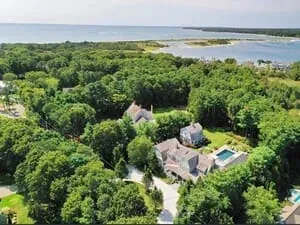
What actually goes wrong in an empty house
Water first, and it is not close. A washing-machine supply hose, a toilet fill valve, a water heater that lets go, a split in a pipe running through an unheated bay, a failed circulator, a roof leak that finds a valley. In an occupied house somebody hears it within an hour and turns a valve. In a closed house it runs until somebody opens the front door, and the difference between those two outcomes is a floor, a ceiling and often a winter's worth of mould.
Heat second. A furnace that quits in January, an oil tank that runs dry because nobody watched the gauge, or a power cut long enough to matter. Freezing is the consequence, and the damage is never the pipe. It is everything downstream of the pipe.
Third is the slow category, the one that does not announce itself: damp and mildew in a house closed up with no air movement, mice that found a gap in October, a gutter that overflowed into a sill all winter, a storm door left unlatched by the last person out. None of that is dramatic on the day. All of it is expensive by May.
Which is why the core of the service is boring and repetitive: a walk-through on a schedule and after every storm, the same checks in the same order, and a written note with photographs each time, so that you can see the house rather than be told about it.
Closing the house for the winter
There are two legitimate strategies for a Cape house over the winter, and the mistake is doing half of each. Either the water is shut at the main and the system is fully drained, or the house is held at a low set point with the heat running and the water live. A drained house cannot freeze, but it also cannot be opened for a spontaneous February weekend without somebody going out first. A heated house is ready whenever you are, and it depends entirely on the heat continuing to work while nobody is there.
If the house is drained, the work is more than turning a valve: the supply lines blown out, traps and toilets protected with antifreeze, the water heater drained, the washing machine and dishwasher lines dealt with, the outside hose bibbs opened, the irrigation blown out, and the ice-maker line, which is the single most frequently forgotten pipe in the whole house. If the house is heated, the set point needs a low-temperature alarm on it and somebody who will actually go when it sounds.
The rest of the close is a list: fridge emptied, cleaned and propped open, perishables gone, storm panels or shutters on where they exist, deck furniture and anything loose stowed, gutters cleared after the leaves are genuinely down rather than during the drop, and the alarms tested. Smoke and carbon monoxide alarms in a seasonal house get their batteries changed on a calendar, not when they chirp, because nobody is there to hear a chirp.
Storms: before, and the walk afterwards
November through March is the Cape's storm season, and it is when the reactive work happens. Before a forecast blow: anything loose off the deck and out of the yard, gutters clear, generator fuelled and test-started if there is one, and shutters up if the forecast justifies it.
Afterwards, the exterior gets walked before anything is touched, with a camera. Roof and flashing read from the ground, gutters and downspouts, the trees and what they dropped, then inside to the basement or crawl space, the sump if there is one, and the ceilings below any roof plane that took the wind. Photographs first, then repairs, because that order is what makes an insurance conversation straightforward later.
Two local specifics are worth checking once for your house rather than guessing at during a storm. Whether the property sits in a mapped flood zone changes the whole plan, and it is a five-minute lookup. And on a low coastal lot, the thing that decides whether water actually arrives is the timing of the storm against high tide, which is why a forecast that sounds identical to last month's can produce a completely different morning.
Opening in the spring
Water goes back on slowly, with somebody standing at the main watching, because a house that has been drained will show you every joint that failed over the winter in the first five minutes. Turning it on quickly and leaving is how a small winter split becomes a flooded ceiling in the hour after the van pulls away.
Then the rest of it: irrigation start-up and the backflow test, the water heater, the appliances run through a cycle, heating and cooling serviced before the first hot week rather than during it, the outdoor shower reconnected, screens back in, the chimney and dryer vent if they are due, a clean, and the grounds cut and edged so the place looks lived in when you pull up.
The date we work to is your arrival, not a convenient week in our schedule. Give us the date and the sequence runs backwards from it.
Everybody else who comes to the property
A Cape house that is looked after properly has a surprising number of people attached to it: cleaners, the landscaper, the alarm company, the oil or propane supplier, a pool service, the chimney sweep, the electrician, the water department, and a rental agent if the house is let. Each of them turns up on their own schedule, and most of them need to get in.
Somebody has to hold the calendar and the keys. Coordinating that from off-Cape by text message is how a house ends up with three people who each assumed one of the others had done the gutters, and one trade standing in the driveway at eight in the morning with no code. We hold it, and we tell you what happened rather than sending you a schedule to manage.
It helps that the grounds and the building are in the same company. The landscaping crew is on the property most weeks in season and they are the ones who notice the gutter that overflowed, the fence panel that moved and the shingle in the flower bed.
Why the builder is the right keyholder
The person who framed the addition knows where the shutoffs are. They know what is behind the wall in the back hall, which valve feeds the outdoor shower, where the flashing runs above the dormer, and which circuit the sump is on. None of that is written down anywhere, and it is exactly the knowledge that decides how bad a February night becomes.
And when the problem turns out not to be a fix but a job — a section of siding, a roof, a bathroom that has to come out — it does not need a second company, a second walk-through and a second month of waiting for an estimate. The company that has been in the house every month is the one that quotes it.
To be clear about the boundary, because these two services get confused: if what you need is somebody to run a build, meaning the schedule, the subcontractors, the budget, the inspections and the permit file, that is construction management and it is a different job with a different shape. This one has no end date. To set it up we need access and alarm codes, the utility and service accounts you already use, any as-built drawings and the septic card, and an agreed figure we can spend to stop a problem getting worse without reaching you first. Call (508) 428-2828 and we will walk the house with you before you close it.


Questions people actually ask
- What is actually included in a winter check?
A walk of the exterior looking at the roof from the ground, the gutters, the foundation and anything that has moved, then inside for temperature, any sign of water, the mechanical room, the sump and the alarms, and a look under every sink. Doors and windows get checked as secure. You get a written note with photographs each time, and a call rather than a note if something needs a decision. Frequency is set per house, plus a visit after every significant storm.
- Should we drain the house or leave the heat on all winter?
Both work; doing half of each does not. Draining removes the risk of a freeze entirely, and the trade-off is that the house cannot be used on short notice. Leaving the heat on at a low set point keeps the house usable, and the trade-off is that it depends on the heat continuing to run while nobody is there, so it needs a low-temperature alarm and somebody local who will go. Which is right depends on how you use the house, not on the house.
- We rent the house in the summer. Is that the same service?
Partly. We look after the building rather than the bookings: the condition of the house, the turnover-week repairs, the things guests break, and the maintenance that a rented house needs faster than a private one because it is used harder. Bookings, guest communication and cleaning schedules stay with you or your rental agent. In practice we work alongside them, and we tell them what is fixed and what is waiting on a part.
- How fast can somebody get to the house after a storm?
We would rather agree the plan for your house in advance than publish a number. After a serious storm plenty of houses need looking at, and the order matters: known exposure, reported alarms and anything with water first. What we set up beforehand is who calls whom, what triggers a visit, and how much we can spend to stop a problem getting worse before reaching you. Ask any company that quotes you a response time what happens when forty houses need one.
- How is this different from construction management?
Construction management is running a build: the schedule, the subcontractors, the budget, the inspections and the permit file, from a start date to a finish date. Property management has no finish date. It is the routine of looking after a house that is already built, through the winters, over years. The two connect at the point where a maintenance problem turns into a real project, and at that point you are not starting over with a new company.
Where to check this yourself
Related work
- Landscaping
Landscaping in Centerville MA and around the Cape: the season from spring clean-up to autumn, coastal planting, irrigation, and grounds care on a seasonal property.
- Roofing and siding
Roofing and siding on Cape Cod from a Centerville contractor: salt air, driven rain, cedar exposure, ice dams on dormers, and storm damage handled honestly.
- Home remodeling
Whole-house remodeling on Cape Cod, in homes built between 1950 and 1990: old wiring, missing insulation, settled floors and the pre-1978 lead rule.
Tell us what the house needs
Call and describe the job. If it is something we do, you will get a straight answer about how it works and what happens next. If it is not, we will say so.